Fill in the details below and our team will get back to you shortly.
How to Choose HVOF Coating Services for Industrial Components
Home » How to Choose HVOF Coating Services for Industrial Components
A damaged coating can create problems long before an industrial component stops working. A pump shaft exposed to abrasive particles, a roller used in steel production, or a valve operating under pressure can gradually lose its surface protection. Once the metal starts wearing down, maintenance requirements increase, and the component may need repair or replacement.HVOF coating is one way to protect such parts. However, getting the right result depends on more than the coating material or the equipment used. The component's working conditions, base metal, required surface finish, and application method all need attention.Businesses comparing HVOF coating services should therefore look at how a provider handles the complete job, from inspecting the component to checking the finished coating.
What should you know about HVOF coating?
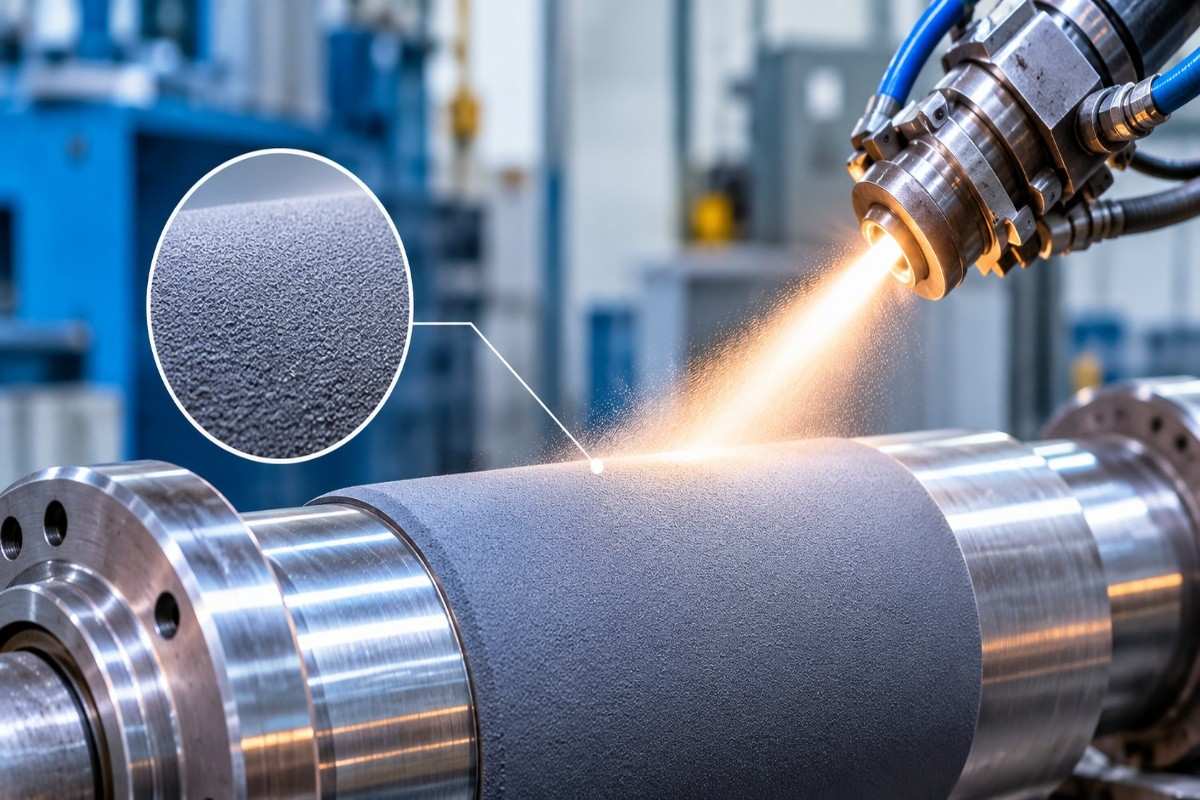
HVOF stands for High Velocity Oxygen Fuel. It is a thermal spray method in which fuel and oxygen produce a high-speed gas stream. Fine coating particles pass through this stream, become heated, and strike the prepared metal surface at high velocity.The particles flatten and build up a coating as they reach the component. They do not need to melt completely to form the layer.The HVOF coating process is commonly used with carbide-based materials such as tungsten carbide-cobalt and tungsten carbide-cobalt-chromium. These coatings are often selected for parts that face abrasion, erosion, and repeated surface contact.The finished coating can have low porosity and strong adhesion when the material and spraying conditions are properly controlled. This makes it useful for industrial parts that need a hard, wear-resistant surface.
How to choose the right HVOF coating services
Before sending a component for treatment, consider the following points. They can help determine whether the proposed coating is suitable for the job.
Check the type of wear on the component
Start by identifying what is damaging the surface. Different operating conditions call for different coating materials.For example:
Abrasive wear: Parts exposed to hard particles may need a carbide-based coating.
Erosion: Components exposed to fast-moving particles or fluids need a coating suited to repeated surface impact.
Corrosion: Parts exposed to chemicals or moisture require a material with suitable corrosion resistance.
Surface friction: Shafts and other moving parts may need a coating that can withstand repeated contact.
A provider should ask about the component's actual working conditions before recommending a solution. A standard coating recommendation may not work equally well for every application.
Ask about coating material selection
The coating material has a direct effect on how the component performs after treatment. Tungsten carbide-based coatings, for instance, are widely used where high wear resistance is required.However, selecting a material based only on its hardness is not enough. Its toughness, corrosion resistance, compatibility with the base metal, and intended operating temperature also matter.When comparing HVOF coating companies, check whether they can explain why a particular coating material is suitable for the component. The recommendation should be based on the application rather than simply on the materials available at their facility.
Understand the surface preparation method
Even a suitable coating can fail if the component is not prepared properly.Before spraying, the surface generally needs cleaning and grit blasting. This removes contaminants and creates the required surface profile for mechanical bonding.Areas that do not need coating must also be masked. Dimensions and surface condition should be checked before the work begins.Ask the provider how it prepares different component materials and how it protects areas that must remain untreated. These details are an important part of reliable HVOF spray coating work.
Check the equipment and process control
The spraying equipment and the way it is operated affect coating quality. Factors such as powder feed rate, spray distance, gun movement, and gas flow need to remain within the required process settings.A provider should have suitable equipment for the component's dimensions and shape. Large rollers, long shafts, and smaller precision parts may require different handling arrangements.When reviewing HVOF coating services, ask how the provider maintains consistency between coating passes and controls the spraying parameters. This is particularly important when several components need the same treatment.
Look at inspection and quality checks
Do not judge a finished coating by appearance alone. A smooth surface does not automatically mean that the coating meets the required specifications.Depending on the application, inspection may include:
Coating thickness measurement
Hardness testing
Bond strength testing
Porosity examination
Surface finish and dimensional checks
The required tests should be decided according to the component and its operating conditions. Ask for inspection records or test results relevant to the job.Reliable HVOF coating companies should be able to explain their quality checks and provide the agreed documentation.
Consider the component's size and shape
Not every component can be coated in the same way. HVOF spraying requires access to the surface being treated. Deep internal passages, narrow recesses, and difficult-to-reach areas can create limitations.The provider should examine the component drawing or inspect the part before confirming the job. This helps identify masking requirements, access issues, and possible dimensional changes.A proper assessment also helps determine whether HVOF spray coating is suitable for the entire surface or only selected areas.
Compare the complete service, not just the price
A low quotation does not always mean lower maintenance costs. Differences in coating thickness, material grade, preparation, and finishing can affect the final result.When comparing HVOF coatings & services, check what each quotation includes. Surface preparation, coating application, machining, inspection, and delivery should be clearly explained.Also ask about expected service conditions and any limitations of the proposed coating. This gives the maintenance team a better basis for comparing providers.
Which industrial components can benefit from HVOF coating?
HVOF coatings are used on components that need protection against demanding surface conditions.Common applications include:
Steel plants: Rollers, shafts, and other production components exposed to abrasion
Oil and gas: Valves, pump parts, and equipment exposed to wear and corrosive environments
Power generation: Selected turbine and machinery components
Paper and pulp: Rollers and other parts used in continuous production
General engineering: Hydraulic components, bearing surfaces, and industrial machine parts
The coating material and thickness must be selected according to the specific application. Not every component in these industries will require the same treatment.
Making the right choice for industrial coating work
Choosing a coating provider requires attention to the component, the operating environment, and the work involved. A proper assessment of the base metal, type of wear, coating material, and finishing requirements can prevent unsuitable treatment choices.It is also worth discussing future maintenance needs before approving the work. Knowing how the coating will be inspected and what conditions it is designed to handle helps businesses plan repairs and equipment maintenance more effectively.EWS LLP provides HVOF coatings & services for industrial applications that require protection against wear and surface damage. Businesses looking for HVOF coating services can explore its HVOF and HVAF coating solutions to discuss the requirements of their industrial components.